
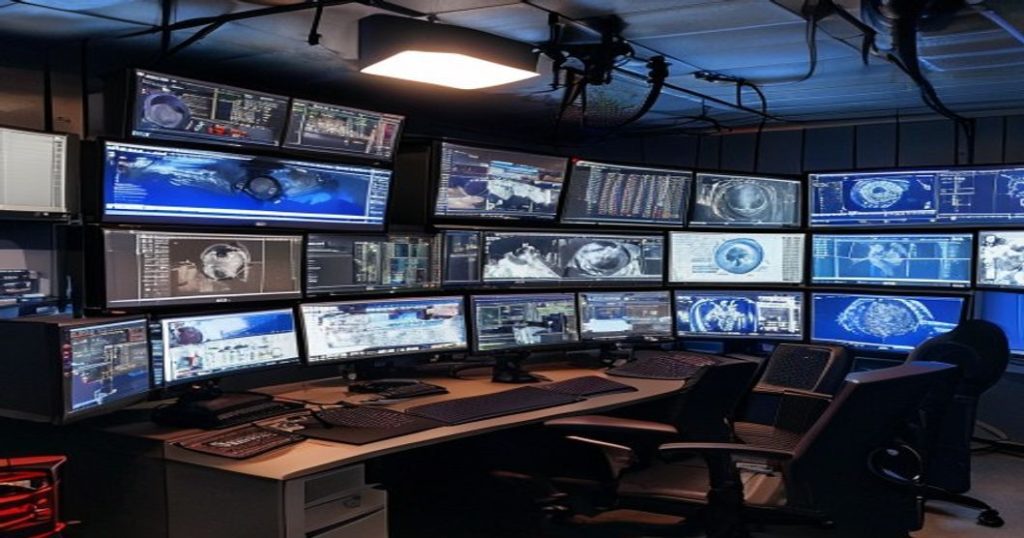
A well-designed hazardous area CCTV system balances camera coverage, certified equipment selection, and compliant wiring methods across all classified zones. Designing a CCTV system for a hazardous area requires integrating safety compliance (equipment certifications), surveillance design (coverage, resolution, detection objectives), and technical infrastructure (cabling, power, VMS) into a single coherent system. This guide walks through each stage of the design process — from reading your area classification document to commissioning the installed system — with practical guidance on the decisions that commonly trip up system designers working with hazardous areas for the first time.
For definitions of key hazardous area terms used in this guide, see the Hazardous Area Classification Glossary.

Stage 1: Understand the Classification Before Specifying Equipment
A well-designed hazardous area CCTV system balances camera coverage, certified equipment selection, and compliant wiring methods across all classified zones. The hazardous area classification document is the foundation of every design decision. Before selecting a single camera, obtain and review:
For definitions of key hazardous area terms used in this guide, see the Hazardous Area Classification Glossary.
- The area classification drawing — Shows zone/division boundaries, gas groups, and temperature classes for every area where cameras will be installed
- The hazardous materials inventory — Identifies which gases or vapors are present and their ignition temperatures (to select the correct T-code)
- The applicable standard — Is this an NEC-governed facility (USA/Canada) or ATEX/IECEx (international)? This determines which certifications are legally required.
A well-designed hazardous area CCTV system balances camera coverage, certified equipment selection, and compliant wiring methods across all classified zones. If the facility does not have a current area classification document, commissioning one is the first step — before any other design work begins. Installing equipment without a valid classification basis creates compliance gaps that are difficult and expensive to resolve after the fact.
For definitions of key hazardous area terms used in this guide, see the Hazardous Area Classification Glossary.
Stage 2: Define Surveillance Objectives
A well-designed hazardous area CCTV system balances camera coverage, certified equipment selection, and compliant wiring methods across all classified zones. CCTV systems in hazardous areas serve several distinct functions, each with different camera placement and specification requirements:
For definitions of key hazardous area terms used in this guide, see the Hazardous Area Classification Glossary.
| Surveillance Objective | Typical Use | Camera Specification Impact |
|---|---|---|
| Area monitoring | General overview of process areas, personnel movement | Wide FOV, lower resolution acceptable, fixed cameras |
| Process monitoring | Watching process equipment — gauges, valves, equipment status | Narrow FOV, higher resolution, fixed cameras with good zoom |
| Personnel safety | Detecting personnel in restricted areas, lone worker monitoring | Wide FOV, detection analytics if budget allows |
| Perimeter security | Detecting unauthorized access at facility boundaries | Long-range cameras or PTZ for large perimeters |
| Incident investigation | Reviewing footage after process incidents or accidents | High resolution, adequate frame rate (15+ fps), good storage duration |
| Remote operation | Monitoring process equipment from a remote control room | Low latency stream, PTZ capability for detailed inspection |
Stage 3: Camera Coverage Design
DORI Analysis
A well-designed hazardous area CCTV system balances camera coverage, certified equipment selection, and compliant wiring methods across all classified zones. DORI (Detection, Observation, Recognition, Identification) is the industry-standard framework for calculating how many cameras are needed and what resolution and focal length achieves the surveillance objective at each location:
For definitions of key hazardous area terms used in this guide, see the Hazardous Area Classification Glossary.
- Detection — Can a person or object be detected in the scene? (25 pixels per meter on target)
- Observation — Can general behavior be observed? (62 pixels per meter)
- Recognition — Can a person or object be recognized (known vs. unknown)? (125 pixels per meter)
- Identification — Can a person be positively identified for legal purposes? (250 pixels per meter)
A well-designed hazardous area CCTV system balances camera coverage, certified equipment selection, and compliant wiring methods across all classified zones. For industrial facilities, most process area cameras need Observation level coverage. For access control and security at entry points, Recognition or Identification level is required. VMS software from vendors like Genetec, Milestone, and Avigilon includes camera placement tools that calculate DORI coverage automatically once lens and sensor specifications are entered.
For definitions of key hazardous area terms used in this guide, see the Hazardous Area Classification Glossary.
Camera Placement in Process Areas
A well-designed hazardous area CCTV system balances camera coverage, certified equipment selection, and compliant wiring methods across all classified zones. Explosion-proof cameras are larger, heavier, and require more clearance than standard cameras. Consider:
For definitions of key hazardous area terms used in this guide, see the Hazardous Area Classification Glossary.
- Mounting height — 3–5 meters is typical for process area overview cameras; higher provides wider coverage but reduces resolution on ground-level details
- Vibration — Process equipment (pumps, compressors) generates vibration that can affect camera image quality. Use vibration-dampening mounts if cameras are within 5 meters of major rotating equipment.
- Thermal environment — Camera T-code must be verified against the maximum ambient temperature at the mounting location, not just the gas ignition temperature
- Access for maintenance — Explosion-proof cameras require periodic inspection. Mount them where a maintenance technician can safely reach with standard access equipment without requiring hot-work permits for every inspection.
Stage 4: Camera Type Selection
| Camera Type | Best Application | Key Consideration for Hazardous Areas |
|---|---|---|
| Fixed explosion-proof | Process area monitoring, perimeter, fixed-point surveillance | Most options available; widest certification range |
| Explosion-proof PTZ | Large area coverage, remote operation, variable inspection | Most expensive; certified rotating flame path required; limited suppliers |
| Explosion-proof dome | Indoor areas, lower-profile installation | Fewer options than fixed box cameras; verify dome cover material |
| Explosion-proof thermal | Perimeter detection, night surveillance, hot-spot detection | Thermal requires ATEX/UL certification of the complete thermal imager assembly |
| Intrinsically safe (portable) | Zone 0 areas, maintenance inspection, portable use | Resolution and capability limited by low-power IS requirements |
Stage 5: Cabling and Power Infrastructure
Conduit and Cable Routing
A well-designed hazardous area CCTV system balances camera coverage, certified equipment selection, and compliant wiring methods across all classified zones. All wiring entering explosion-proof camera enclosures must be installed per NEC Article 501 (for NEC facilities) or IEC 60079-14 (for IEC/ATEX facilities):
For definitions of key hazardous area terms used in this guide, see the Hazardous Area Classification Glossary.
- NEC Class I Division 1 — Threaded rigid metal conduit (RMC) or Type MI cable. Explosion-proof sealing fittings within 18 inches of each housing entry.
- NEC Class I Division 2 — Threaded RMC or IMC conduit; flexible metal conduit permitted for last 18 inches to equipment to absorb vibration.
- ATEX Zone 1 and 2 — Cable with certified cable glands (ATEX-certified for the zone) is common; conduit also permitted.
PoE Power
A well-designed hazardous area CCTV system balances camera coverage, certified equipment selection, and compliant wiring methods across all classified zones. PoE (Power over Ethernet) is the most practical power solution for IP explosion-proof cameras:
For definitions of key hazardous area terms used in this guide, see the Hazardous Area Classification Glossary.
- PoE (802.3af) — 15.4W available; sufficient for basic fixed cameras without IR illumination
- PoE+ (802.3at) — 30W available; covers most fixed explosion-proof cameras with IR illumination
- PoE++ (802.3bt) — 60–90W available; required for PTZ explosion-proof cameras and cameras with heated windows for cold climate installations
A well-designed hazardous area CCTV system balances camera coverage, certified equipment selection, and compliant wiring methods across all classified zones. The PoE switch must be in a non-classified area or in a classified-rated enclosure. For large facilities, mid-span PoE injectors can be installed in equipment rooms to extend the network without running low-voltage power wiring through the classified area.
For definitions of key hazardous area terms used in this guide, see the Hazardous Area Classification Glossary.
Fiber Optic Runs
A well-designed hazardous area CCTV system balances camera coverage, certified equipment selection, and compliant wiring methods across all classified zones. For camera runs exceeding 100 meters, use fiber optic cable with media converters. Fiber offers additional benefits in industrial environments:
For definitions of key hazardous area terms used in this guide, see the Hazardous Area Classification Glossary.
- Immunity to electromagnetic interference from process equipment, motors, and variable frequency drives
- No ground loop issues between camera and control room
- Runs of up to 2 km (singlemode fiber) without repeaters
- Media converter at the camera end must be in a certified enclosure if in a classified area
Stage 6: Video Management System (VMS) Selection
A well-designed hazardous area CCTV system balances camera coverage, certified equipment selection, and compliant wiring methods across all classified zones. The VMS is the software platform that manages recording, monitoring, and access to camera feeds. For hazardous area systems, key requirements:
For definitions of key hazardous area terms used in this guide, see the Hazardous Area Classification Glossary.
- ONVIF compliance — Most explosion-proof IP cameras are ONVIF-conformant. Ensure the VMS supports ONVIF Profile S (streaming) and Profile G (recording).
- Redundancy — For critical industrial monitoring, VMS server redundancy (failover) is important. Camera footage cannot be lost during server maintenance.
- Storage calculation — Industrial systems typically store 30–90 days of continuous recording. Calculate storage based on camera count, resolution, frame rate, and compression codec (H.265 reduces storage by ~50% vs. H.264).
- Integration — Industrial facilities often need CCTV integrated with access control, alarm systems, and process control (DCS/SCADA) — verify VMS integration capabilities.
Stage 7: Documentation Package
A well-designed hazardous area CCTV system balances camera coverage, certified equipment selection, and compliant wiring methods across all classified zones. A compliant hazardous area CCTV installation requires a documentation package that survives the lifetime of the installation. Minimum documentation:
For definitions of key hazardous area terms used in this guide, see the Hazardous Area Classification Glossary.
- Camera schedule — location, model, certification number, zone/division classification at mounting point
- As-built drawings — camera positions overlaid on facility plot plan, with classified area boundaries
- Equipment certificates — copies of UL certificates or ATEX certificates for every camera, housing, and cable gland installed in classified areas
- Cable and conduit schedule — routing, conduit type, sealing fitting locations
- Sealing compound fill records for NEC sealing fittings
- Initial inspection and commissioning record
- Maintenance plan specifying inspection frequency for each camera
Common Design Mistakes to Avoid
- Specifying cameras before obtaining the classification document — Results in cameras that may not be certified for the actual zone they’ll be installed in
- Ignoring gas group — Specifying Group D cameras for a Group C (ethylene) area is a compliance failure, even if both are “Division 1”
- Using standard flexible conduit in Division 1 areas — Only Type MI cable or liquidtight flexible metal conduit (LFMC) with sealing fittings is permitted in C1D1 for final connections
- Locating VMS servers in classified areas — VMS servers are standard IT equipment; they must be in non-classified control rooms or server rooms
- No maintenance access provisions — Cameras mounted where a ladder cannot be safely positioned in the classified area become impossible to inspect without expensive isolation or scaffolding
- Insufficient storage — Industrial incidents often require reviewing footage from weeks prior; 7-day recording retention is almost always inadequate for industrial applications
Frequently Asked Questions
Where do I start when designing a hazardous area CCTV system?
A well-designed hazardous area CCTV system balances camera coverage, certified equipment selection, and compliant wiring methods across all classified zones. Start with the hazardous area classification document for your facility. This identifies zone/division designations, gas groups, and required equipment certifications at every camera location. Without this document, camera specification cannot be completed. If it doesn’t exist, commission an area classification study before proceeding.
For definitions of key hazardous area terms used in this guide, see the Hazardous Area Classification Glossary.
Can I use PoE for explosion-proof cameras?
A well-designed hazardous area CCTV system balances camera coverage, certified equipment selection, and compliant wiring methods across all classified zones. Yes. Standard PoE (802.3af/at) powers most fixed explosion-proof cameras. The PoE switch must be in a non-classified area or certified enclosure. PoE+ is required for cameras with IR illumination; PoE++ for PTZ cameras. The Ethernet cable runs to the camera through a certified cable gland at the housing entry.
For definitions of key hazardous area terms used in this guide, see the Hazardous Area Classification Glossary.
How far can I run Ethernet cable to an explosion-proof camera?
A well-designed hazardous area CCTV system balances camera coverage, certified equipment selection, and compliant wiring methods across all classified zones. Standard Cat5e/Cat6 supports 100 meters maximum per IEEE 802.3. For longer runs, use fiber optic cable with a media converter at the camera end (converter must be in a certified enclosure if in a classified area). Fiber also eliminates EMI interference common in industrial environments with large motors and VFDs.
For definitions of key hazardous area terms used in this guide, see the Hazardous Area Classification Glossary.
How many explosion-proof cameras do I need for adequate coverage?
A well-designed hazardous area CCTV system balances camera coverage, certified equipment selection, and compliant wiring methods across all classified zones. Coverage calculation depends on surveillance objective, camera resolution, and lens field of view. A DORI analysis is the formal method. As rough starting points: for area monitoring, one 2MP camera per 80–100 linear meters; for process monitoring or personnel identification, one camera per 15–20 meters. Camera placement design tools from VMS vendors automate this calculation.
For definitions of key hazardous area terms used in this guide, see the Hazardous Area Classification Glossary.
What VMS works best with explosion-proof cameras?
A well-designed hazardous area CCTV system balances camera coverage, certified equipment selection, and compliant wiring methods across all classified zones. Most explosion-proof cameras are ONVIF-compliant IP cameras inside certified housings — they work with any ONVIF-compatible VMS. For large industrial facilities, enterprise platforms like Genetec Security Center, Milestone XProtect, or Avigilon Control Center provide the scalability and redundancy needed. The VMS server must be located in a non-classified area.
For definitions of key hazardous area terms used in this guide, see the Hazardous Area Classification Glossary.
Further Resources
A well-designed hazardous area CCTV system balances camera coverage, certified equipment selection, and compliant wiring methods across all classified zones. Browse Veilux’s range of explosion-proof cameras and explosion-proof housings certified for hazardous areas. For regulatory reference, see NFPA 70 (National Electrical Code) and OSHA hazardous location electrical safety.
For a complete overview of all selection criteria, see the Explosion-Proof Camera Selection Guide: Complete Hub.